
Career Station - Loading
CMAT Preparation Guide: What Nepali Students Must Know - Career Station Blog
Published on August 2, 2026

CMAT Preparation Guide: What Nepali Students Must Know

Are you planning to join BBA, BBM, BHM, or BTTM in Nepal? Then preparing for the CMAT exam is your first step toward that goal. This guide will help you understand everything you need to know about the CMAT (Central Management Admission Test) and how to prepare effectively.

Whether you are a student from Kathmandu or anywhere across Nepal, this blog is for you!

What is CMAT?

CMAT stands for Central Management Admission Test. It is conducted by Tribhuvan University, Faculty of Management (TU-FOM) for admission into bachelor-level management courses such as:

  • BBA (Bachelor of Business Administration)
  • BBM (Bachelor of Business Management)
  • BHM (Bachelor of Hotel Management)
  • BTTM (Bachelor of Travel and Tourism Management)
  • BPA (Bachelor of Public Administration)
  • BIM (Bachelor of Information Management)

Every year, thousands of students from all over Nepal apply for CMAT to get admission into TU-affiliated colleges.

Eligibility for CMAT

To apply for CMAT, you must meet the following criteria:

  • Completed +2 or equivalent level in any stream.
  • Scored a minimum of 40% or C Grade in each subject.
  • Must fill out the CMAT form online through the official website of TU-FOM or your chosen college.

CMAT Exam Structure

The CMAT exam is a multiple-choice question (MCQ) test. It contains 100 questions with a total of 100 marks. The time duration is 90 minutes.

Here is the subject-wise breakdown:

Section Questions Marks
Verbal Ability 25 25
Quantitative Ability 25 25
Logical Reasoning 25 25
General Awareness 25 25
Total 100 100

Note: You must score at least 40% in CMAT to qualify for the next round, such as an interview or group discussion.

How to Prepare for CMAT – Step-by-Step Guide

1. Understand the Syllabus

Before you start preparing, make sure you understand what each section includes:

  • Verbal Ability: Grammar, synonyms and antonyms, comprehension, sentence correction
  • Quantitative Ability: Basic mathematics, including percentage, profit and loss, time and speed, etc.
  • Logical Reasoning: Puzzle solving, series, pattern recognition
  • General Awareness: Current affairs, business news, and Nepal-related general knowledge

2. Make a Study Plan

Create a daily study schedule that covers all four sections. Spend more time on the subjects or topics where you need improvement.

For example:

  • Monday: Verbal Ability + Quantitative Ability
  • Tuesday: Logical Reasoning + General Awareness
  • Wednesday: Practice Test
  • Thursday: Verbal Ability + Quantitative Ability
  • Friday: Logical Reasoning + General Awareness
  • Saturday: Full Mock Test
  • Sunday: Review mistakes and revise weak areas

3. Use the Right Study Materials

Using the right preparation materials can make your CMAT preparation more effective. Some useful resources include:

  • CMAT preparation books from Khanal Publications or Herald Books
  • Online practice resources from sites such as MeroNotice, Edusanjal, and Career Station
  • CMAT preparation videos on YouTube, including Nepali educational channels

4. Practice Past Questions

Solve previous years' CMAT questions regularly. Practicing past questions helps you understand the question patterns, identify frequently tested topics, improve your speed, and build confidence.

5. Take Mock Tests

Try full-length mock tests regularly. Mock tests help you improve your time management, accuracy, speed, and exam-taking strategy.

After every mock test, review your incorrect answers and identify the topics where you need more practice.

6. Stay Updated with General Knowledge

General Awareness is an important part of CMAT preparation. Stay updated with current events, business news, and important developments in Nepal and around the world.

You can:

  • Read newspapers such as The Kathmandu Post.
  • Follow reliable Nepali current affairs platforms.
  • Use general knowledge and current affairs apps.
  • Regularly review important national and international events.

Interview and Group Discussion Preparation After CMAT

After passing the CMAT written test, you may be called for the next stage, which can include:

  • Group Discussion (GD)
  • Personal Interview (PI)

For these stages, focus on improving your communication skills, confidence, and awareness of current issues in Nepal and around the world.

Practice answering basic questions such as:

  • Why do you want to study BBA or BBM?
  • What are your career goals?
  • What is management?
  • Why did you choose this course?
  • Why do you want to study at this college?

Why Choose Career Station for CMAT Preparation?

At Career Station, we help students prepare for CMAT with comprehensive guidance and practical preparation resources.

  • Expert teachers
  • Updated study materials
  • Regular mock tests
  • Group discussion and interview training
  • Free counseling for choosing the best college
  • Affordable courses
  • Friendly learning environment
  • Proven success record

Visit www.careerstation.com.np to learn more or contact us to book your seat.

Final Tips for CMAT Success

  • Start early: Begin your preparation at least 1–2 months before the exam.
  • Practice daily: Consistency is the key to effective preparation.
  • Review your mistakes: Learn from every practice test and past question.
  • Manage your time: Practice answering questions within the given time limit.
  • Take care of your health: Get enough sleep, eat well, and take regular breaks while studying.
  • Believe in yourself: Stay positive and remain consistent throughout your preparation.

Conclusion

CMAT is an important step toward building a career in business and management. With smart planning, consistent practice, and the right guidance, you can prepare effectively for the exam and work toward admission to top colleges in Nepal.

If you are looking for expert guidance and structured CMAT preparation, Career Station is here to support you throughout your journey.

All the best for your CMAT journey!
Other Blogs

August 6, 2026
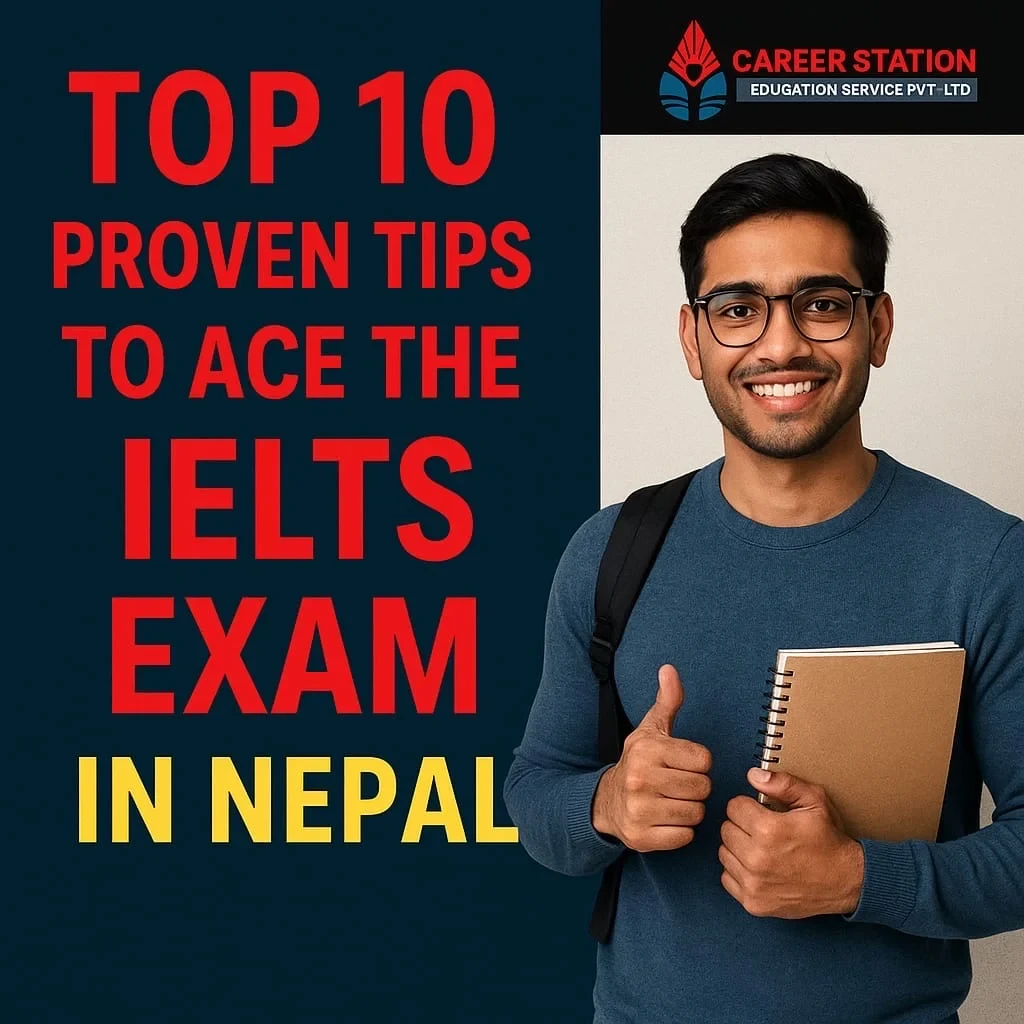
Are you planning to study or work abroad from Nepal? Then passing the IELTS exam can be an important step toward achieving your international education or career goals. Don’t worry — IELTS is not as intimidating as it may seem. With the right strategy, regular practice, and consistent preparation, you can work toward achieving a strong score. Here are the top 10 simple and practical tips to help you prepare for the IELTS exam in Nepal. 1. Understand the IELTS Test Format Before you start studying, learn how the IELTS exam works. It consists of four sections: Listening Reading Writing Speaking Understanding the structure and question types in each section will help you prepare more effectively and feel more confident on test day. 2. Take a Practice Test First Start your preparation with a practice or diagnostic test to understand your current level. This can help you identify your strengths and the areas where you need more improvement. Many websites and IELTS preparation centers in Nepal offer free or paid practice tests and mock exams. Tip: Take another practice test after a few weeks of preparation to measure your progress. 3. Set a Daily Study Plan Create a realistic study timetable and stick to it. Even one hour of focused practice every day can be more effective than trying to study everything at the last minute. Try focusing on different skills on different days. For example: Monday: Reading Tuesday: Listening Wednesday: Writing Thursday: Speaking Friday: Vocabulary and grammar Saturday: Mock test Sunday: Review mistakes and revise 4. Build Your English Vocabulary Improve your vocabulary by learning new words regularly and using them in your speaking and writing practice. You can improve your vocabulary by: Reading English newspapers such as The Kathmandu Post Reading books, articles, and online publications in English Watching English-language programs and videos Listening to English podcasts Keeping a vocabulary notebook and reviewing new words regularly Instead of simply memorizing words, learn how to use them naturally in sentences. 5. Improve Your Listening Skills Listen to English every day through news programs, videos, podcasts, or IELTS listening practice materials. While listening, try to understand the main idea and identify important details. Pay attention to different accents and pronunciation styles. Regular listening practice can help improve your comprehension and can also support your speaking development. 6. Practice IELTS Writing Task 1 and Task 2 Writing requires regular practice. Practice both Task 1 and Task 2 according to the IELTS test format you are taking. Focus on: Organizing your ideas clearly Using appropriate vocabulary Writing clear and grammatically accurate sentences Connecting ideas logically Managing your time effectively Ask a teacher or experienced IELTS instructor to review your writing and provide feedback on grammar, structure, vocabulary, and task response. 7. Practice Speaking with a Friend Don’t be afraid to speak English regularly. Practice with a friend, study partner, teacher, or even by speaking aloud to yourself. During practice, focus on: Fluency Pronunciation Grammar Vocabulary Expressing your ideas clearly Try recording your answers occasionally so you can identify areas that need improvement. 8. Practice with a Timer The IELTS exam has strict time limits, so time management is an important part of preparation. Practice completing reading passages, writing tasks, and listening exercises within the appropriate time limits. This will help you become more comfortable working under exam conditions. Tip: During practice tests, avoid spending too much time on a single difficult question. 9. Consider IELTS Coaching Classes If you feel that you need expert guidance, consider joining an IELTS preparation course in Nepal. A good coaching center can provide: Experienced IELTS instructors Regular mock tests Speaking practice Writing feedback Study materials Personalized guidance Career Station provides IELTS preparation support for students who want structured classes, practice tests, and personalized feedback. 10. Stay Calm and Confident Finally, believe in your preparation. Feeling nervous before an important exam is normal, but staying calm can help you perform at your best. Get enough rest before the exam, arrive on time, follow the instructions carefully, and focus on one section at a time. Remember: Consistent preparation builds confidence. Final Words Getting a strong IELTS score is achievable with regular practice, the right strategy, and consistent effort. Whether you are from Kathmandu, Pokhara, or anywhere else in Nepal, these preparation tips can help you build the skills and confidence you need for the IELTS exam. Start early, practice regularly, learn from your mistakes, and track your progress along the way. Need Help with IELTS Preparation? Career Station Nepal provides IELTS preparation support, mock tests, and personalized guidance to help students prepare for their English proficiency test. Call us: +977-9848459849 Visit: careerstation.com.np Start your IELTS preparation today and take the next step toward your study-abroad goals.
Read More
August 5, 2026
Dreaming of studying or settling abroad? You’re not alone. Every year, thousands of Nepali students make the exciting yet challenging decision to continue their education in countries such as Australia, Canada, the UK, the USA, and beyond. But with so many steps, from course selection to visa processing, it’s easy to feel overwhelmed. That’s why finding the best consultancy in Nepal is one of the most important decisions you’ll make on your study-abroad journey. In this blog, we’ll walk you through why a consultancy matters, what makes a consultancy truly “the best,” how to choose the right one for you, and why Career Station can be your reliable study-abroad partner. Why You Need a Consultancy Going abroad for higher education involves much more than simply filling out forms. A trusted consultancy can help you with: Choosing the right country and course based on your academic background and career goals Selecting universities that fit your academic profile and budget Preparing required documents such as SOPs, financial documents, and academic transcripts Preparing for English and entrance tests such as IELTS, PTE, SAT, or TOEFL Visa application support, including documentation and interview preparation Pre-departure and post-arrival guidance, such as accommodation assistance and airport pickup information These services can make the process smoother and less stressful, especially for first-time applicants and their families. What Makes a Consultancy the “Best”? Not all consultancies are created equal. A good study-abroad consultancy stands out by providing honest guidance, knowledgeable support, transparent communication, and a student-first approach. 1. Accreditation and Legitimacy Always choose a consultancy that is properly registered and authorized to operate. You can also check whether the consultancy is affiliated with relevant professional organizations such as the Education Consultancy Association of Nepal (ECAN) where applicable. Tip: Ask the consultancy about its registration and membership details before making a decision. 2. Experienced and Qualified Counselors Good consultancies have trained counselors who understand different countries, university requirements, admission processes, and visa procedures. They should provide guidance based on your academic profile, financial situation, career goals, and preferred destination rather than simply recommending the most convenient option. 3. Transparent Fees and Policies Avoid consultancies that hide charges or make unrealistic promises. A professional consultancy should clearly explain its service fees, application-related costs, university fees, and other expenses before you proceed. Always ask for a clear breakdown of costs and understand what is included in the services. 4. Quality Test Preparation Whether you need IELTS, PTE, TOEFL, or SAT preparation, a quality consultancy can provide access to effective preparation resources, experienced instructors, mock tests, and updated study materials. 5. Strong Communication and Support From your first counseling session to your departure, a reliable consultancy should remain available to answer your questions and help you understand each stage of the process. Mistakes to Avoid While Choosing a Consultancy Choosing the wrong consultancy can cost you time, money, and valuable opportunities. Avoid these common mistakes: Falling for “Guaranteed Visa” Offers No consultancy can guarantee that your visa will be approved. A good consultancy can help you prepare a strong and accurate application, but the final decision is made by the relevant immigration authority. Not Verifying the Consultancy’s Registration Before working with a consultancy, check whether it is legally registered and authorized to operate. Ask for relevant registration details or professional memberships where applicable. Being Pressured into Courses or Countries You Didn’t Choose You should never feel pressured into choosing a particular country, university, or course simply because it is recommended to you. A good consultancy should first understand your academic background, financial circumstances, career plans, and personal preferences before recommending suitable options. Skipping Test Preparation English proficiency tests and other entrance examinations can play an important role in university admission. Prepare properly and understand the score requirements of your preferred universities. Ignoring Reviews and Testimonials Before choosing a consultancy, research its reputation. Look at student reviews, testimonials, and feedback from people who have previously used its services. Why Career Station Can Be Your Best Option At Career Station, we believe every student has a unique academic background, career goal, and study-abroad journey. Rather than taking a one-size-fits-all approach, we take time to understand your profile, goals, and challenges so we can help you explore suitable options. Personalized Counseling Every student is different. Our counseling approach focuses on understanding your individual goals and helping you make informed decisions about your study-abroad plans. Destination Guidance We provide study-abroad counseling for destinations including: Australia: Popular for its education system, diverse programs, and post-study opportunities. Canada: Known for its multicultural environment and opportunities for international students. UK: Offers globally recognized universities and many shorter-duration programs. USA: Offers scholarship opportunities, research programs, and globally recognized universities. New Zealand & Europe: Offers a range of student-friendly study destinations and academic opportunities. English Test Preparation Career Station offers preparation support for: IELTS PTE TOEFL SAT Depending on the course, preparation may include mock tests, speaking practice, study materials, and guidance from experienced instructors. Complete Application Support From preparing your Statement of Purpose (SOP) and submitting university applications to document verification and visa interview preparation, we assist students throughout the application process. Post-Visa and Pre-Departure Support Our support does not necessarily end when your visa is approved. We can also guide students through pre-departure preparation, including flight planning, accommodation guidance, and adjusting to life abroad. How Career Station Simplifies the Process Step Our Support 1. Counseling Personalized counseling based on your academic profile and goals 2. Country & Course Selection Guidance based on your career goals, academic background, and preferences 3. Test Preparation IELTS, PTE, and SAT preparation and practice support 4. University Application Application support, documentation, and SOP guidance 5. Visa Processing Document checklist, application guidance, and interview preparation 6. Pre-Departure Briefing Travel, accommodation, and practical preparation guidance Rather than simply pushing students toward particular institutions, our goal is to help you explore options that fit your academic, financial, and career goals. Countries Where We Help Students Apply Every country has different admission processes, visa requirements, education systems, and opportunities. Here’s a quick overview: Australia Wide range of universities and courses Multiple intake options for many programs Opportunities for eligible international students to work while studying Post-study work opportunities may be available depending on current regulations and eligibility Canada Multicultural and diverse society Many recognized universities and colleges Work opportunities for eligible international students Immigration and permanent residence pathways may be available depending on current eligibility and government policies UK World-renowned universities Many master's programs can be completed in one year Post-study work opportunities may be available depending on current visa rules and eligibility USA Scholarship and financial aid opportunities at some institutions Globally recognized universities and research institutions Optional Practical Training (OPT) opportunities may be available to eligible students New Zealand & Europe Student-friendly study environments A range of academic programs and institutions Opportunities for eligible international students to work while studying, depending on local regulations Final Words Choosing the right consultancy can have a significant impact on your study-abroad journey. Don’t choose a consultancy simply because it is the most popular or closest to you. Choose one that understands your goals and provides transparent, reliable, and personalized guidance. At Career Station, we are committed to providing honest, ethical, and professional support to students planning to study abroad. Whether you are confused about where to begin or ready to submit your application, our team is here to guide you through each stage. Ready to Start Your Study-Abroad Journey? Contact Career Station today for a free counseling session. Website: careerstation.com.np Email: [email protected] Phone: +977-9848459849 Take the first step toward your international education journey with Career Station.
Read More
August 4, 2026
The USA has always been a top choice for Nepali students because of its high-quality education, flexible learning environment, and career opportunities. But applying to study in the USA is not just about filling out forms — it requires careful planning and following the right steps. Here’s a clear, step-by-step guide for Nepali students who are planning to study in the USA. Step 1: Research and Choose the Right University Start by shortlisting 3–5 universities that suit your academic goals, budget, and preferred location. Things to check: Course relevance: Does the program match your career plan? Ranking & reputation: Check rankings and university reputation using sources such as QS, THE, or U.S. News. Tuition fees: Depending on the university and program, tuition can range from approximately $15,000 to $50,000 per year. Living costs: Cities such as New York can be expensive, while smaller cities and towns may offer lower living costs. SEVP certification: Make sure the university is authorized to enroll international students. Tip: Create a comparison chart to evaluate universities based on tuition fees, location, programs, scholarships, and admission requirements. Step 2: Check Admission Requirements Each university sets its own admission requirements. Generally, you may need: Academic transcripts such as SEE, +2, or Bachelor's-level transcripts Minimum GPA requirement, often around 2.5–3.0 or higher depending on the program English proficiency test scores such as IELTS, PTE, or TOEFL Standardized test scores such as SAT, GRE, or GMAT, depending on the course and university Statement of Purpose (SOP) Letters of Recommendation (LORs), usually 2–3 Tip: Carefully check the official university website to make sure you do not miss any specific or additional requirements. Step 3: Prepare for English Proficiency and Entrance Tests Many U.S. universities require international students to provide proof of English proficiency. Common tests include: IELTS: Around 6.0–7.0 band, depending on the university and program TOEFL iBT: Around 80–100, depending on the university and program PTE: Around 50–65, depending on the university and program Other possible tests include: SAT: Commonly used for undergraduate admissions. A score of 1200+ may be competitive at some universities. GRE: May be required or recommended for some master's and graduate programs. GMAT: May be required or recommended for some business and MBA programs. Tip: Start test preparation at least 4–6 months before your application deadlines if you need significant preparation time. Step 4: Prepare Your Application Documents Your application should be complete, accurate, and professionally prepared. Common documents include: Academic certificates and transcripts: Provide official or appropriately certified documents as required by the university. Valid passport: Make sure your passport is valid and meets the requirements for your intended travel. Statement of Purpose (SOP): Clearly explain why you want to study in the USA, why you selected the particular course, and your future goals. Letters of Recommendation (LORs): Usually provided by teachers, professors, or employers, depending on the program. Resume/CV: Commonly required for postgraduate applicants. Portfolio: May be required for creative programs such as design, architecture, or related fields. Tip: Customize your SOP and other application materials for each university rather than submitting the exact same application everywhere. Step 5: Submit Your University Applications Most university applications are submitted online through the university's official application portal or an approved application platform. Typical intake periods: Fall Intake (August/September): Applications are commonly submitted between October and March, depending on the university and program. Spring Intake (January): Applications are commonly submitted between April and August, depending on the university and program. Application fees: Many universities charge an application fee, often around $50–$100, although fees vary and some universities may waive them. Tip: Apply to a balanced mix of “dream,” “target,” and “safe” universities to increase your options. Step 6: Receive Your Offer Letter and Get the I-20 Form Once you receive an admission offer: Review the offer letter carefully and complete any required conditions. Pay the required admission deposit if requested by the university. Provide the financial and other documents required by the university. Request and obtain your Form I-20, which is an important document for the F-1 student visa process. Tip: Keep digital and physical copies of your admission and financial documents for your visa application and future reference. Step 7: Apply for an F-1 Student Visa The F-1 student visa process generally includes several steps: Pay the required SEVIS I-901 fee. Pay the applicable visa application fee. Complete the DS-160 online application form. Schedule your U.S. visa interview according to the current procedures for applicants in Nepal. Prepare the required supporting documents. Commonly required documents may include: Form I-20 SEVIS payment receipt DS-160 confirmation Valid passport Visa appointment confirmation Bank statements and financial documents Sponsor or financial support documents, if applicable Academic documents Evidence supporting your study plans and circumstances Important: Visa fees, SEVIS fees, and other U.S. government charges can change. Always verify the latest fees and requirements through official U.S. government and U.S. Embassy sources before making any payment. Tip: Practice answering common visa interview questions such as “Why did you choose this course?”, “Why this university?”, and “How will you fund your studies?” Answer honestly and consistently with your application. Step 8: Prepare for Departure Once your visa is approved, start preparing for your journey to the USA. Arrange accommodation, either on-campus or off-campus. Book your flight after carefully considering your university's reporting and orientation dates. Attend pre-departure orientation sessions. Pack essential documents in your carry-on luggage. Keep your passport, visa, I-20, admission documents, and other important papers easily accessible. Tip: Keep all official documents together in a separate folder so they are easy to access during your journey and upon arrival. Step 9: Arrive and Start Your Studies After arriving in the USA: Arrive in time for your university's orientation and reporting requirements. Attend orientation sessions and complete the required university registration processes. Arrange essential services such as a U.S. bank account and mobile SIM or phone plan. Learn about the employment rules that apply to F-1 students. Stay informed about your responsibilities as an international student. Tip: Maintain the required full-time enrollment and follow all F-1 student regulations to help maintain your immigration status. Final Advice for Nepali Students Start early: The entire process can take many months, so begin planning well in advance. Be honest: Provide accurate information in your university application and visa interview. Keep backups: Maintain digital and physical copies of important documents. Research carefully: Always verify university, visa, financial, and travel requirements using current official sources. Get professional guidance if needed: Proper guidance can help you avoid common mistakes during the application process. Conclusion Studying in the USA can be a rewarding opportunity for Nepali students, but the application process requires careful preparation. From selecting the right university and preparing your documents to obtaining your I-20 and applying for an F-1 visa, every step matters. Start your preparation early, research your options carefully, and make sure you understand the latest requirements before submitting your application. With the right planning and preparation, your journey from Nepal to studying in the USA can be much smoother and more manageable.
Read More